Small Apartment Decorating Ideas That Make Any Space Feel Bigger
This post contains affiliate links. If you click a link and make a purchase, I may earn a small commission at no extra cost to you. I only recommend products I genuinely believe in. Thank you for supporting The Tender Home!
There’s a very specific kind of frustration that comes with decorating a small apartment. You scroll Pinterest for an hour, fall in love with a beautifully styled living room, and then look up at your actual space — 600 square feet, one window, a landlord who will take your entire security deposit if you hang so much as a single nail wrong — and close the app.
But here’s what those Pinterest rooms aren’t telling you: most of the tricks that make a space look larger, brighter, and more intentional have nothing to do with square footage. They’re about light, scale, and how your eye moves through a room.
This guide covers exactly those tricks — practical, renter-safe, small apartment decorating ideas on a budget that work whether you’re in a studio, a one-bedroom, or any space that feels like it’s fighting against you. No renovation required. No landlord conversations needed.
Before you decorate anything, declutter first. The most beautifully styled room still feels cramped if it has too much stuff in it. Read: How to Declutter Your Home in One Weekend →
What’s in this guide
The 3 design principles every small space needs

Before you buy a single thing, internalize these three ideas. They’re the reason some small apartments feel cozy and intentional while others feel cramped and sad — and the difference usually has nothing to do with money.
1. Light is your most powerful tool
Natural light makes a room feel bigger than almost anything else you can do. Your job is to maximize it and then supplement it strategically. Keep windows clear of heavy drapes — swap them for sheer linen curtains that let light through while maintaining privacy. Hang curtain rods close to the ceiling (not just above the window frame) and let the curtains fall to the floor — this creates the illusion of taller walls and more vertical space.
When natural light is limited, layer your artificial lighting. One overhead light creates flat, harsh illumination that shrinks a room visually. Instead, use table lamps, floor lamps, and LED strip lights behind furniture or under shelves to create warmth and depth.
2. Scale matters more than size
This one surprises people: a few large-scale pieces of furniture will make a small room feel bigger than the same room full of small furniture. Small furniture reads as “filler” and makes the space look cluttered even when it isn’t. One substantial sofa, one proper dining table, one large area rug — these anchor a room and give it weight.
The area rug rule specifically: go bigger than you think you need. In a small living room, a rug that barely fits under the coffee table makes the room feel chopped up. A rug that extends under the front legs of the sofa creates a unified zone that visually expands the space.
3. Vertical space is untapped square footage
Most people decorate horizontally — across surfaces, along walls at eye level. In a small apartment, you also need to think vertically. Floor-to-ceiling shelving draws the eye upward and creates storage without using more floor space. Hanging plants from the ceiling add life without taking up surface area. Art hung high makes walls feel taller. Every inch above your eye line is potential.
Living room ideas for small apartments
The mirror trick that every designer uses
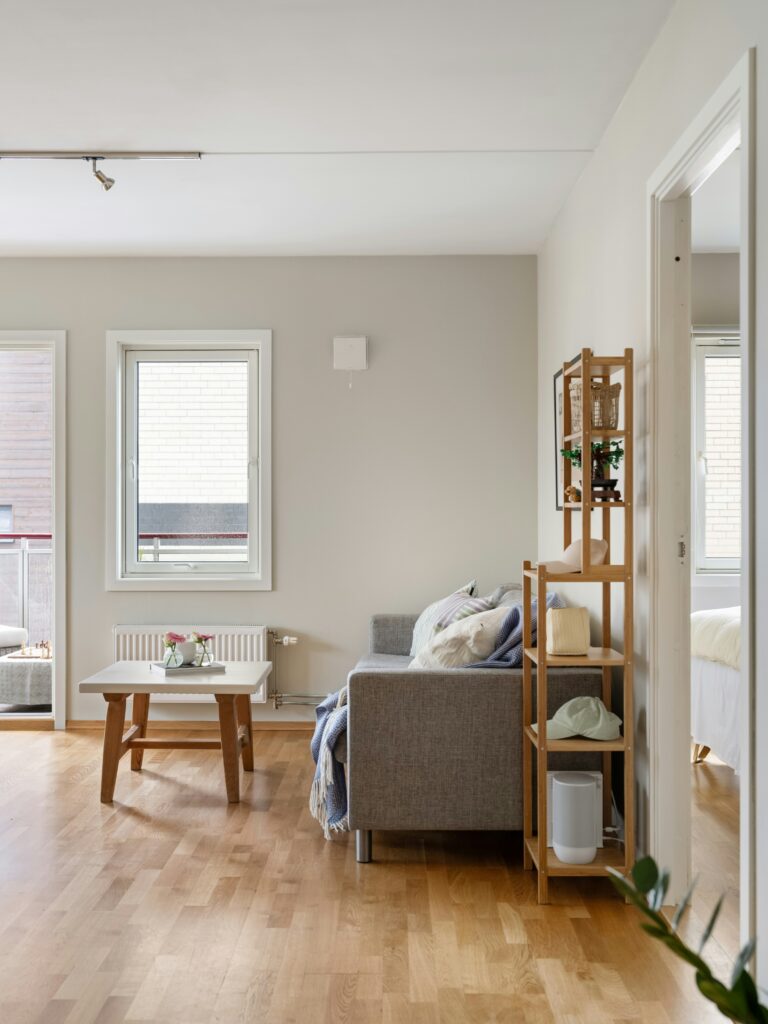
A large mirror is the most impactful single purchase you can make for a small living room. Strategically placed, it reflects light and creates the visual impression of a room that extends beyond the wall. Lean a large floor mirror against your longest wall, or hang an oversized mirror opposite a window to double the light in the space.
This doesn’t have to be expensive. IKEA’s Hovet mirror and similar finds from Amazon and TJ Maxx work just as well as designer options.
Furniture that does two jobs
In a small apartment, every piece of furniture should earn its space by doing more than one thing. A storage ottoman replaces a coffee table and gives you hidden storage for blankets and remotes. A daybed doubles as a sofa and guest sleeping. A console table behind the sofa creates a divider in an open-plan space and adds a surface for lamps and decor.
The pieces to avoid in small living rooms: bulky sectional sofas (they dominate), glass-top coffee tables that read as clutter magnets, and anything on high legs that creates visual dead space underneath.
The floating shelves upgrade
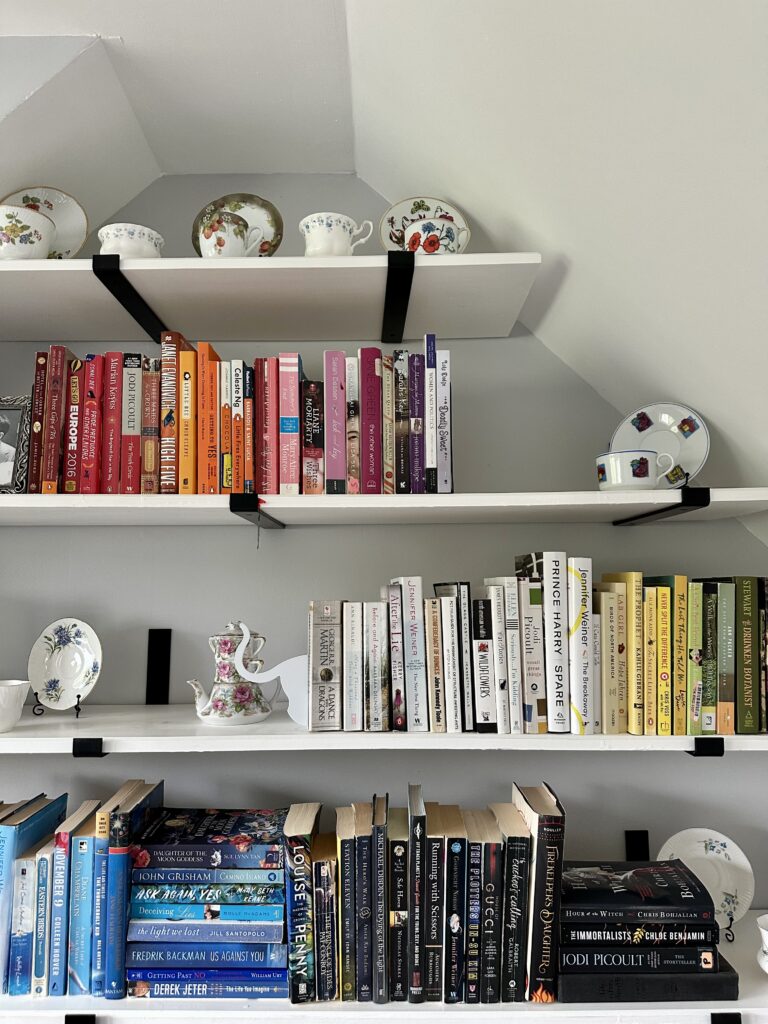
Remove the bookcase and replace it with floating shelves that run up the wall. You get the same storage in the same footprint but the visual weight disappears — and you reclaim floor space. Style them with a mix of books, plants, and a few decorative objects. The rule of thumb: one plant per shelf, books grouped by color or spine-facing inward for a cleaner look.
Color and pattern strategy
Light, neutral walls make small rooms feel larger — this is well-established. But “neutral” doesn’t have to mean beige. Soft white, warm greige, pale sage, and even a gentle terracotta all work beautifully in small spaces. The key is keeping the largest surfaces (walls, sofa, rug) in a cohesive, light palette and adding personality through smaller accent pieces you can change cheaply.
If you’re renting and can’t paint, peel-and-stick wallpaper on a single accent wall changes the entire character of a room without touching your deposit.
Bedroom ideas that maximize every inch
The bed placement rule
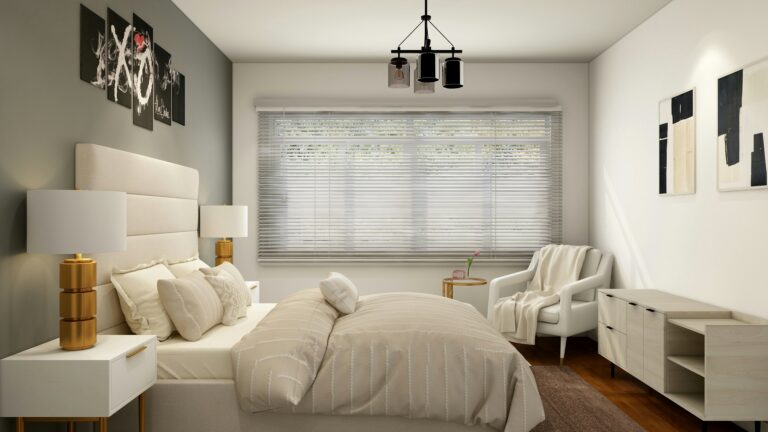
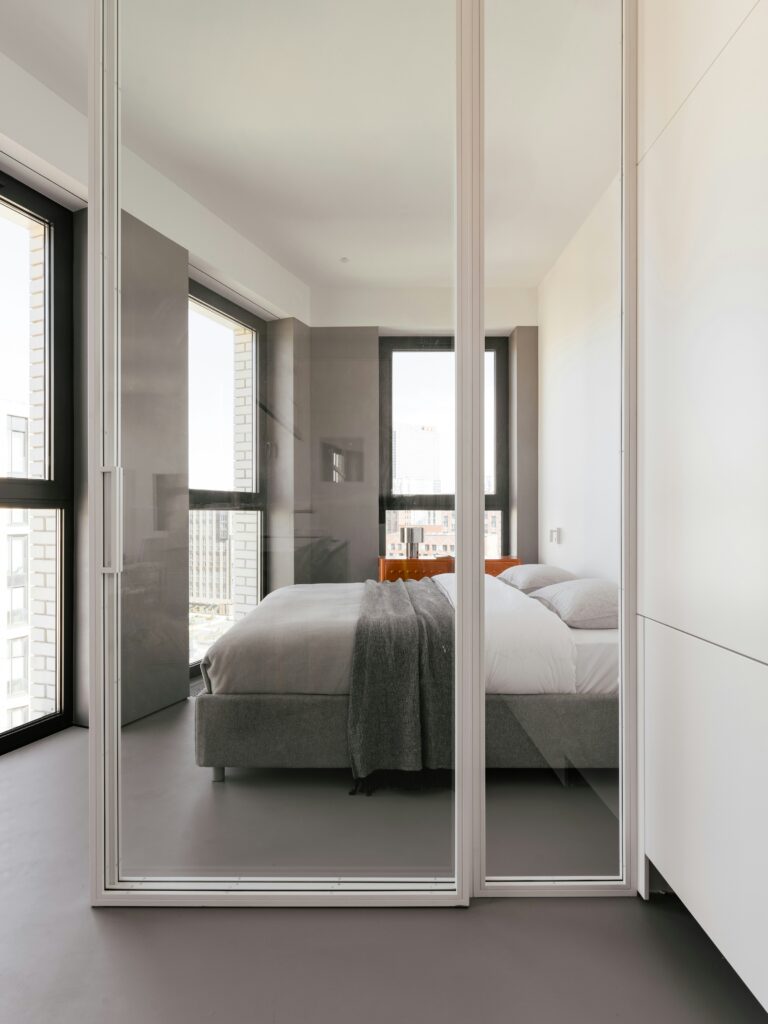
In most small bedrooms, the bed goes against the wall furthest from the door — this creates the most visual floor space when you walk in and makes the room feel more intentional. If you have two windows, place the bed between them rather than blocking one. If you’re in a studio, consider a Murphy bed (get one on Wayfair) or a loft bed to completely transform your floor plan.
Bedside tables are optional
Traditional bedside tables are floor space you can’t always afford. Alternatives that work just as well: a small floating shelf mounted at mattress height (no floor footprint at all), a wall-mounted sconce with a built-in shelf, or a slim nightstand that tucks fully under the side of the bed. If your nightstand is wider than your pillow, it’s too big for a small bedroom.
Under-bed storage done right
The space under your bed is the most underutilized storage real estate in a small apartment. Flat, rolling storage containers keep things accessible without requiring you to dig. The key is using this space intentionally — for seasonal items, extra bedding, or shoes — not as a general dumping ground. A bed skirt or platform bed frame hides the storage and keeps the room looking clean.
Closet upgrades that cost almost nothing
If your closet has a single hanging rod, you’re wasting half the vertical space. Adding a second rod at a lower height doubles your hanging capacity. A shelf riser turns one shelf into two. Over-the-door organizers add pocket storage to the back of the door. These are $10–$30 investments that can transform a disorganized closet into a functional one.
Kitchen and dining area ideas
Visual continuity makes small kitchens feel larger
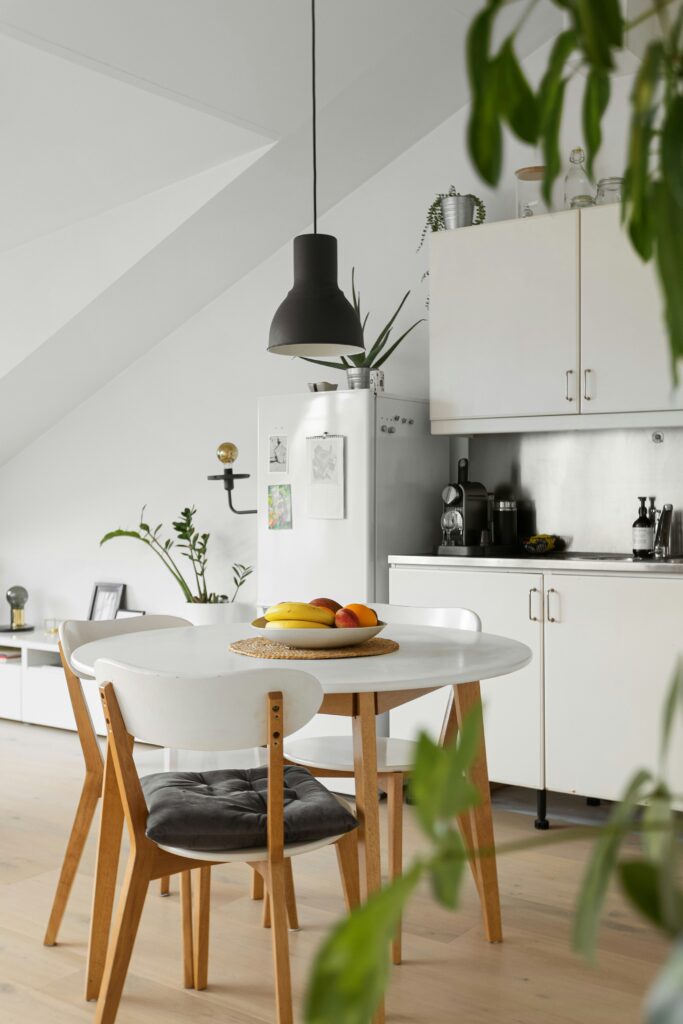
Clutter on kitchen countertops is the number one thing that makes a small kitchen feel oppressive. Keep only your most-used appliances on the counter — coffee maker, toaster, maybe one other. Everything else goes in a cabinet. When the counters are clear, even a small kitchen reads as spacious.
Open shelving in a small kitchen is a double-edged sword — it looks beautiful when it’s styled well and absolutely chaotic when it isn’t. If you go the open shelving route, commit to keeping it curated: matching dishes, a few plants, consistent colors. If that sounds like maintenance you don’t want, keep the cabinet doors.
The dining table problem — and the solution
A traditional four-seat dining table is too large for most studio and one-bedroom apartments. The alternatives that actually work: a round table for two that fits two chairs and can expand with a leaf for guests, a bar-height table against a wall with stools that tuck fully underneath when not in use, or a wall-mounted drop-leaf table that folds flat when you’re not eating.
Bathroom ideas for tiny spaces
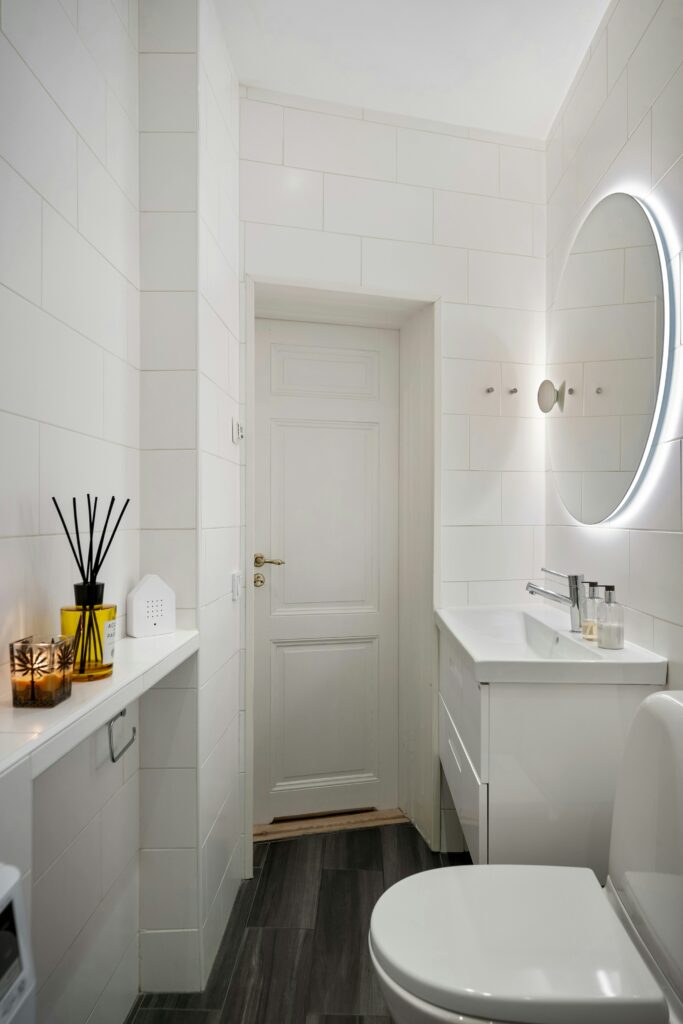
Bathrooms are the room where small-space principles are most forgiving — because everyone expects them to be small. A few targeted changes make a big difference:
- Vertical storage over the toilet — an over-toilet shelf unit uses vertical space that’s otherwise completely wasted.
- Replace a shower curtain with a clear liner — a dark or patterned shower curtain visually chops the bathroom in half. A clear liner keeps the full depth of the space visible.
- A large mirror above the sink — use the full width of the vanity if possible. More mirror = more reflected light = larger-feeling space.
- Hooks over shelves — robe hooks on the back of the door free up floor space and keep towels accessible without a towel bar taking up wall real estate.
- Edit your products ruthlessly — a bathroom counter covered in bottles makes any bathroom feel smaller. Keep only daily-use items out. Everything else goes in a drawer or cabinet.
The renter’s cheat sheet: no damage, all style
Everything in this guide is achievable without losing your deposit. Quick reference:
- Hanging art without nails: Command strips hold up to 16 lbs. For heavier pieces, use monkey hooks — they fit into drywall through a tiny hole that patches with a dab of white toothpaste.
- Peel-and-stick everything: Wallpaper, tiles (for kitchen backsplash), and contact paper all come off cleanly.
- Freestanding over permanent: A freestanding shelf beats a built-in. A floor lamp beats a wired sconce. Design around portability.
- Curtain rods with tension: Tension rods fit inside window frames without drilling a single hole.
- Rugs over wall-to-wall carpet: Yes, you can put a rug over carpet. It defines zones, covers ugly flooring, and pulls a room together instantly.
Start with one room
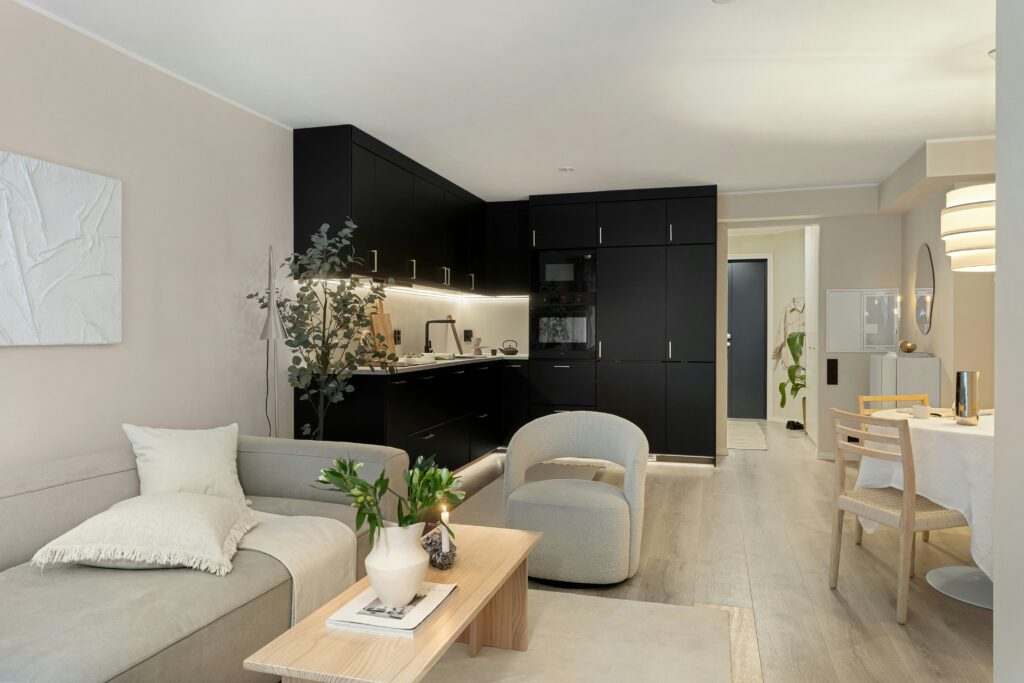
The biggest mistake with small-space decorating is trying to do everything at once. Pick one room — the one where you spend the most time or the one that bothers you the most — and apply these principles there first. One well-designed room changes how you feel about your entire home.
And if you want to go further, I’ve put together a complete guide to IKEA hacks that make every room look like it cost three times what it did. Read it next.