How to Style a Bookshelf Like an Interior Designer
This post contains affiliate links. If you click a link and make a purchase, I may earn a small commission at no extra cost to you. I only recommend products I genuinely believe in. Thank you for supporting The Tender Home!
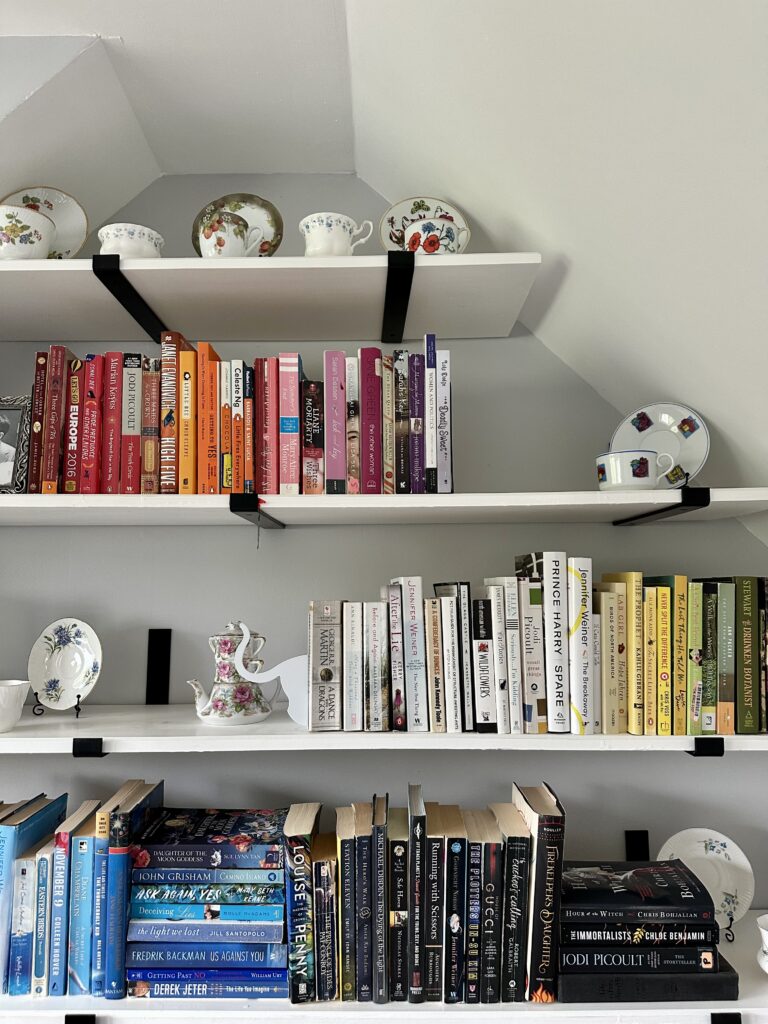
A beautifully styled bookshelf is one of those things that looks effortless when you see it done well and completely mysterious when you try to replicate it. You put your books on the shelf, add a candle, try to arrange things, move them around for fifteen minutes, and end up with something that still looks like a bookshelf full of stuff rather than a designed space.
The difference between a shelf that looks designed and one that just looks full is almost entirely about understanding a few rules that interior designers apply automatically.
Once you know the rules, you’ll see them in every styled shelf you’ve ever admired — and you’ll be able to replicate the effect with whatever you already have. In this guide, you will learn how to style a bookshelf like an interior designer.
What’s in this guide
The foundation: the rule of odd numbers
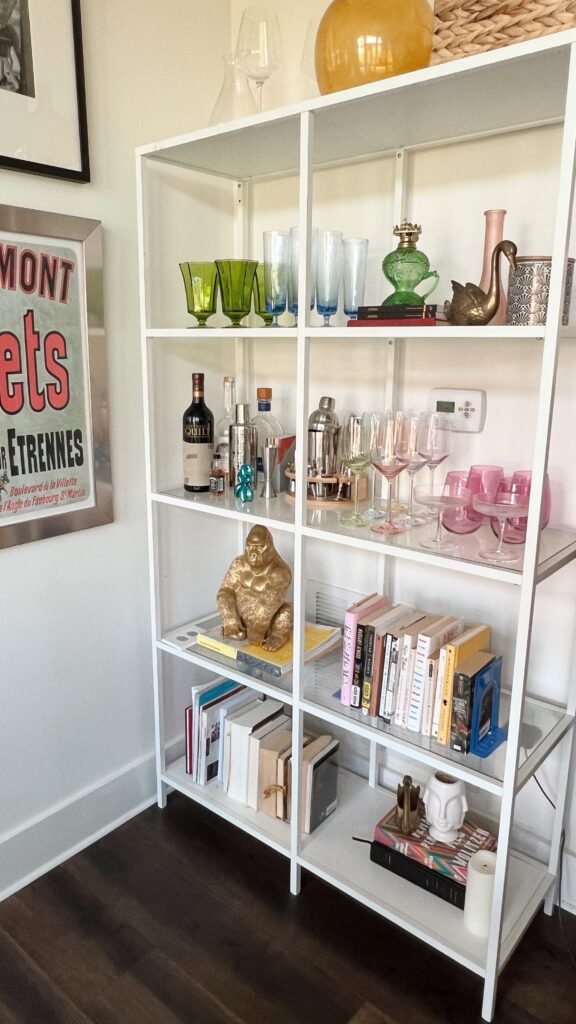
Objects arranged in odd numbers (3, 5, 7) look more natural and interesting to the eye than even numbers. Two objects feel balanced but static. Three objects create tension and movement. This is why design vignettes almost always use groups of three — one tall element, one medium, one low — and why a shelf styled with groups of odd numbers looks more dynamic than one arranged symmetrically.
Apply this: instead of placing one candle on a shelf, place a candle, a small plant, and a decorative object as a group of three. Vary the heights within the group. Then leave space before the next grouping.
The book arrangement formula
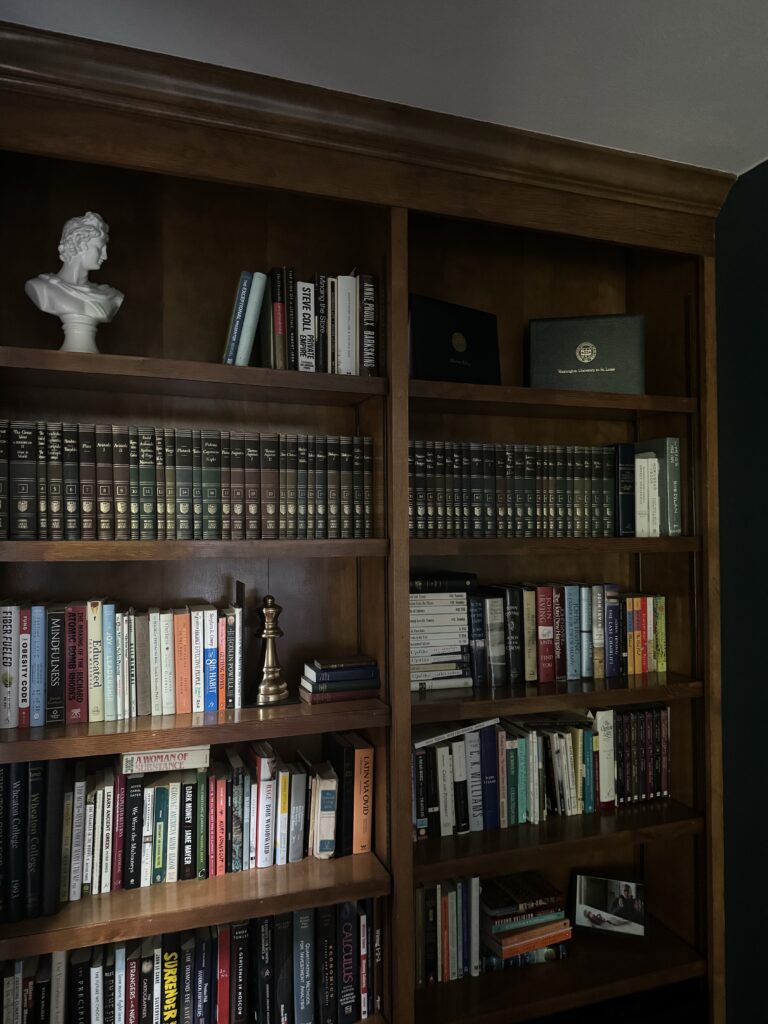
Books are both the functional core of a bookshelf and its hardest element to style — mainly because most people arrange them one way (all vertical, spine out) and stop there.
Interior designers mix three book arrangements to create visual rhythm:
- Vertical runs — groups of books standing upright, spines out. The default arrangement, but used in shorter runs rather than filling an entire shelf.
- Horizontal stacks — 2–4 books laid flat, creating a platform for a small object (a plant, a candle, a sculptural piece) on top. These stacks break up the vertical rhythm and add depth.
- Art-facing — turn a few books so the pages face out rather than the spines. This creates a neutral, textured section of the shelf that gives the eye a place to rest.
Use all three across a single bookcase. A typical well-styled shelf might have a vertical run, then a horizontal stack with a plant on top, then an art-facing section, then another vertical run. The variety is what makes it look curated.
The five elements of a styled shelf
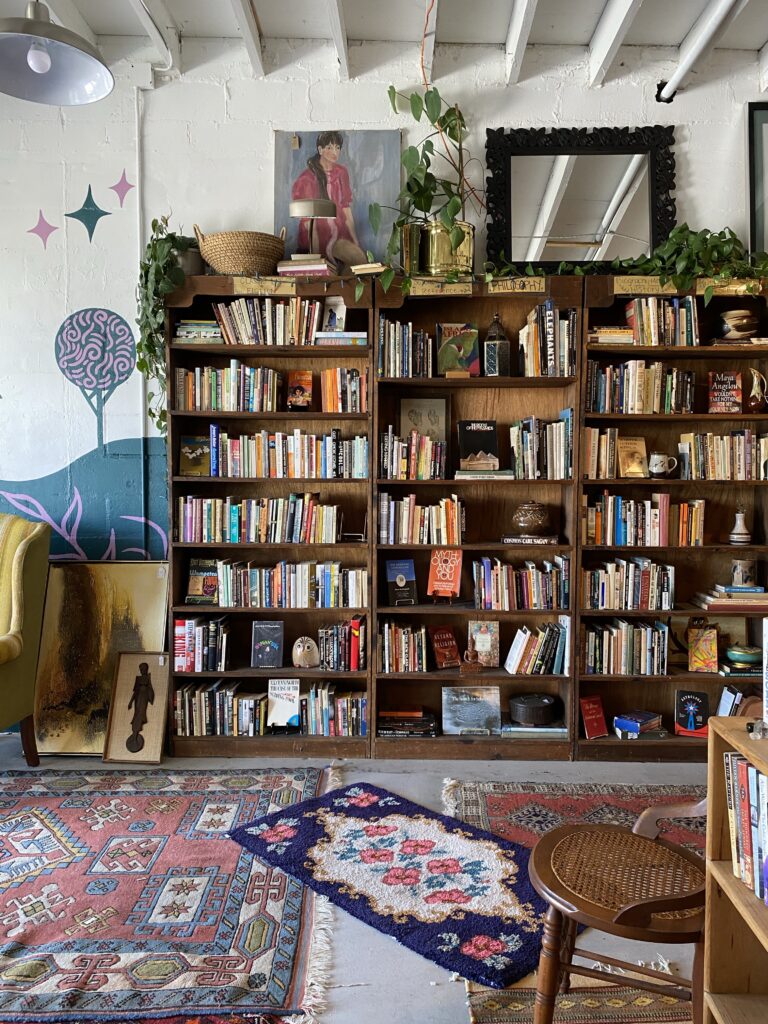
Every beautifully styled bookshelf contains a version of these five elements, even if the specific objects vary completely:
1. A tall anchor
Every shelf needs at least one object that draws the eye upward — a tall vase, a large plant, a framed print leaning against the back, or a stack of particularly tall books. This vertical anchor gives the shelf structure and prevents everything from reading as one flat horizontal line.
2. A plant or something living
Living things add warmth that no decorative object can replicate. A small trailing plant that hangs over the shelf edge (pothos and heartleaf philodendron are perfect for this), a succulent in a terracotta pot, or even a small bunch of dried eucalyptus in a bud vase. One plant per shelf minimum.
3. A textural element
Something woven, rough, or natural-textured — a small woven basket, a ceramic object with an interesting glaze, a wooden bookend, a piece of coral or a stone. Texture is what makes a shelf feel tactile and considered rather than like a display in a store.
4. Something personal
A photo in a small frame, a found object from a trip, a small piece of art, a meaningful book. Shelves that look beautiful but feel cold are missing personal objects. One or two personal items ground the shelf in your actual life rather than making it look like a showroom.
5. Empty space
This is the element most people forget. Intentional empty space on a shelf is not wasted space — it’s breathing room that lets everything else read clearly. A shelf stuffed to capacity with objects, no matter how individually beautiful, reads as cluttered. Leave at least one-third of every shelf deliberately empty.
Color cohesion: the trick that ties it all together
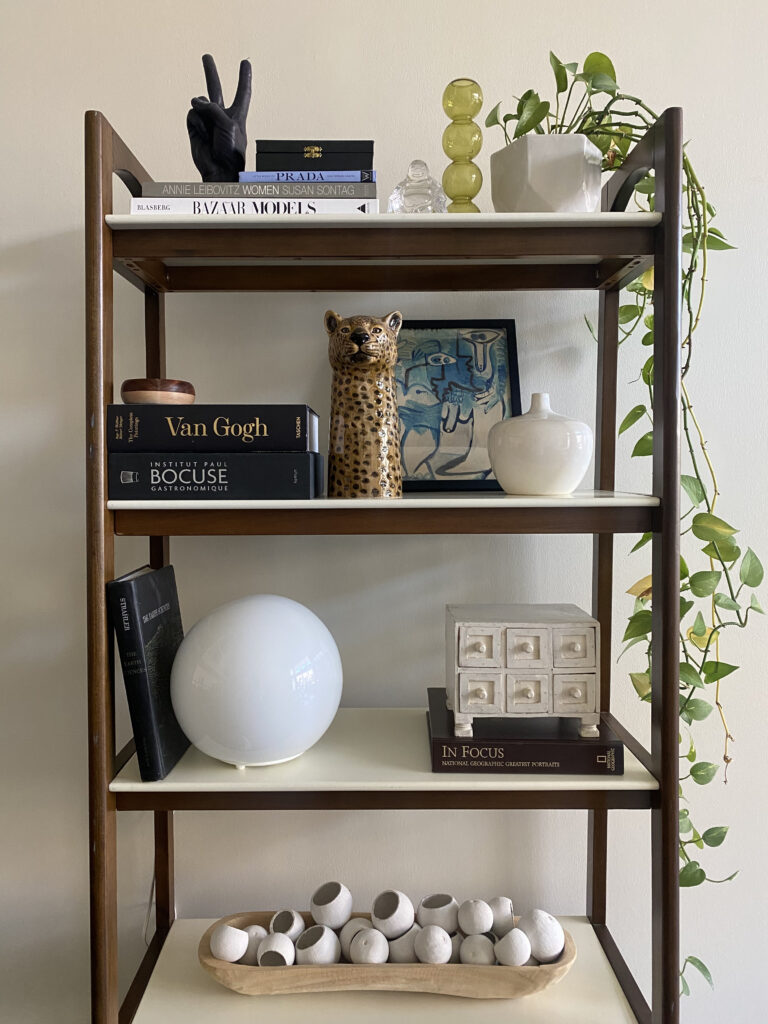
The fastest way to make a mismatched collection of objects look intentional is to limit the color palette of the shelf. Pick 2–3 colors and only use objects in those shades.
For a warm, natural palette: creams, warm whites, terracotta, and natural wood tones. For a cooler, more minimal palette: whites, greys, black, and green plants. For a rich, moody palette: deep navy, brass, dark wood, and warm cream.
Your books are the hardest element to control for color — but you have options. You can group books by spine color (all the warm-toned spines together, all the neutrals together). You can turn some books around so the white pages face out. Or you can embrace the color variety of books and keep your decorative objects in a strictly limited palette so they anchor the shelf.
How to restyle a shelf you already have
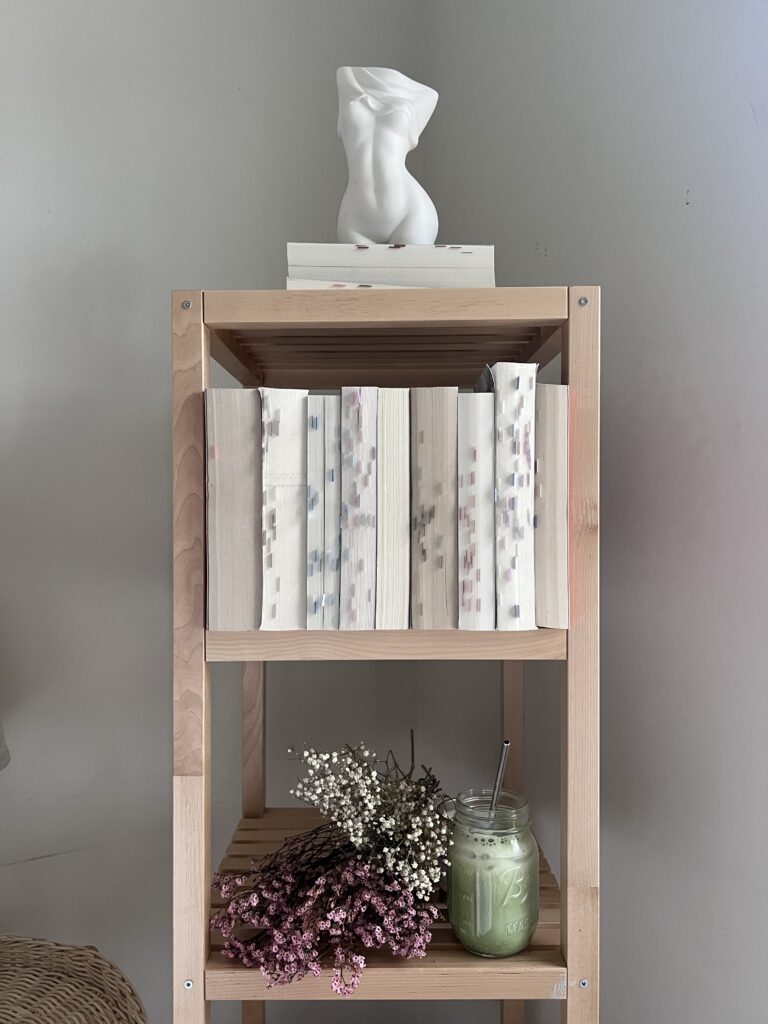
- Take everything off. Start completely fresh rather than moving things around on a full shelf — you’ll make better decisions.
- Sort your objects by color and height. This gives you a clear picture of what you’re working with.
- Place your largest, tallest anchor items first — one per shelf section.
- Add a plant to every shelf.
- Create horizontal book stacks at varying intervals. Add one small object on top of each stack.
- Fill remaining vertical space with upright book runs, mixing in your textural and personal objects.
- Step back and identify where the eye wants to rest. Add empty space to any section that feels too dense.
- Live with it for a day before making small adjustments. Shelves often look better once you stop looking at them like a project.
What to do when you don’t have enough objects
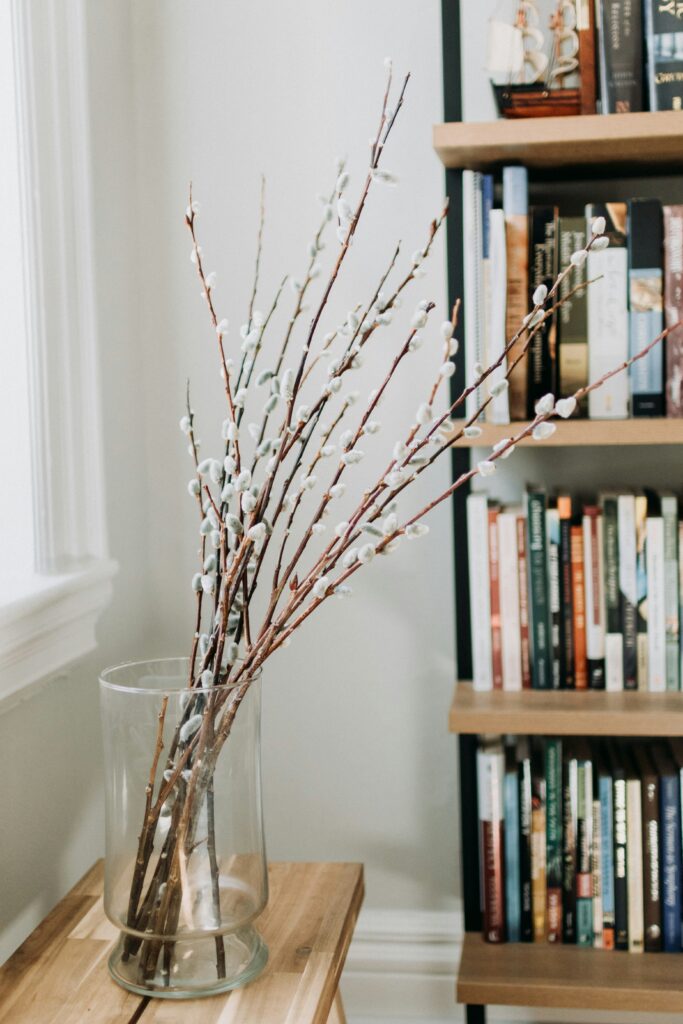
More is not always the answer. If your shelf looks bare rather than styled, the solution is almost never buying more things — it’s choosing better things. One beautiful ceramic vessel does more for a shelf than five small trinkets. One interesting plant does more than a row of small succulents.
A few low-cost ways to fill a shelf with intentional objects: frame a piece of art printed from Unsplash (free, high quality) in an IKEA frame. Stack your most beautiful books horizontally as a feature. Use a simple white candle in a brass holder. None of these cost more than $15 and all of them add more to a shelf than the average decorative object.
→ Next: The $100 Living Room Refresh That Changes Everything