How to Build a Capsule Closet: The Only Guide You’ll Ever Need

This post contains affiliate links. If you click a link and make a purchase, I may earn a small commission at no extra cost to you. I only recommend products I genuinely believe in. Thank you for supporting The Tender Home!
You have clothes. Possibly a lot of clothes. And yet most mornings you stand in front of a full closet, move three things to the left, move them back, and ultimately put on the same outfit you wore Tuesday.
This is not a you problem. This is a closet organization problem — specifically, a closet that has too many choices and not enough coherence. A capsule closet fixes this by giving you fewer pieces that work harder: a curated collection where everything fits well, everything goes with everything else, and getting dressed takes three minutes instead of thirty.
This guide covers exactly how to build a capsule wardrobe from scratch— how to edit your current wardrobe, how many pieces you actually need, how to organize them so everything is visible and accessible, and how to stop the slow creep of clutter from undoing all your work
What’s in this guide
What is a capsule closet, really?
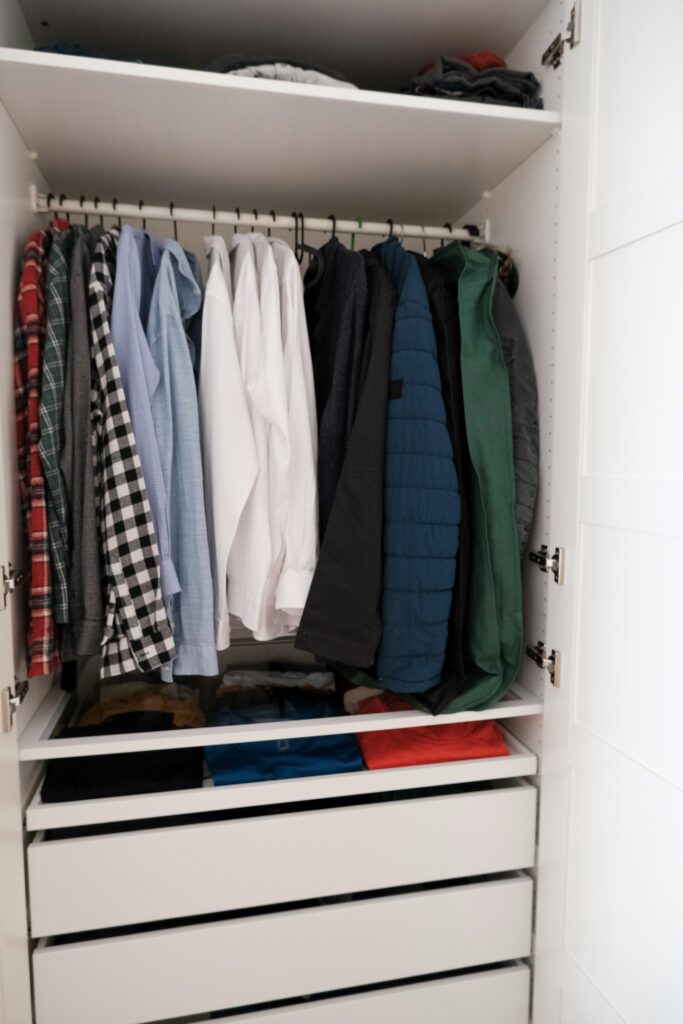
A capsule wardrobe is a small collection of versatile, high-quality pieces that can be mixed and matched to create a large number of outfits. The term was coined by a London boutique owner in the 1970s, popularized by stylists and minimalists, and has been overcomplicated by the internet ever since.
The reality is simple: you’re aiming for a closet where you love everything in it, everything fits you right now, and most things work together. That’s it. There’s no magic number of pieces, no specific color palette requirement, and no rule that says you have to dress like you’re in a neutral-toned Instagram feed.
Step 1: The ruthless edit (this is where most people stop — don’t)
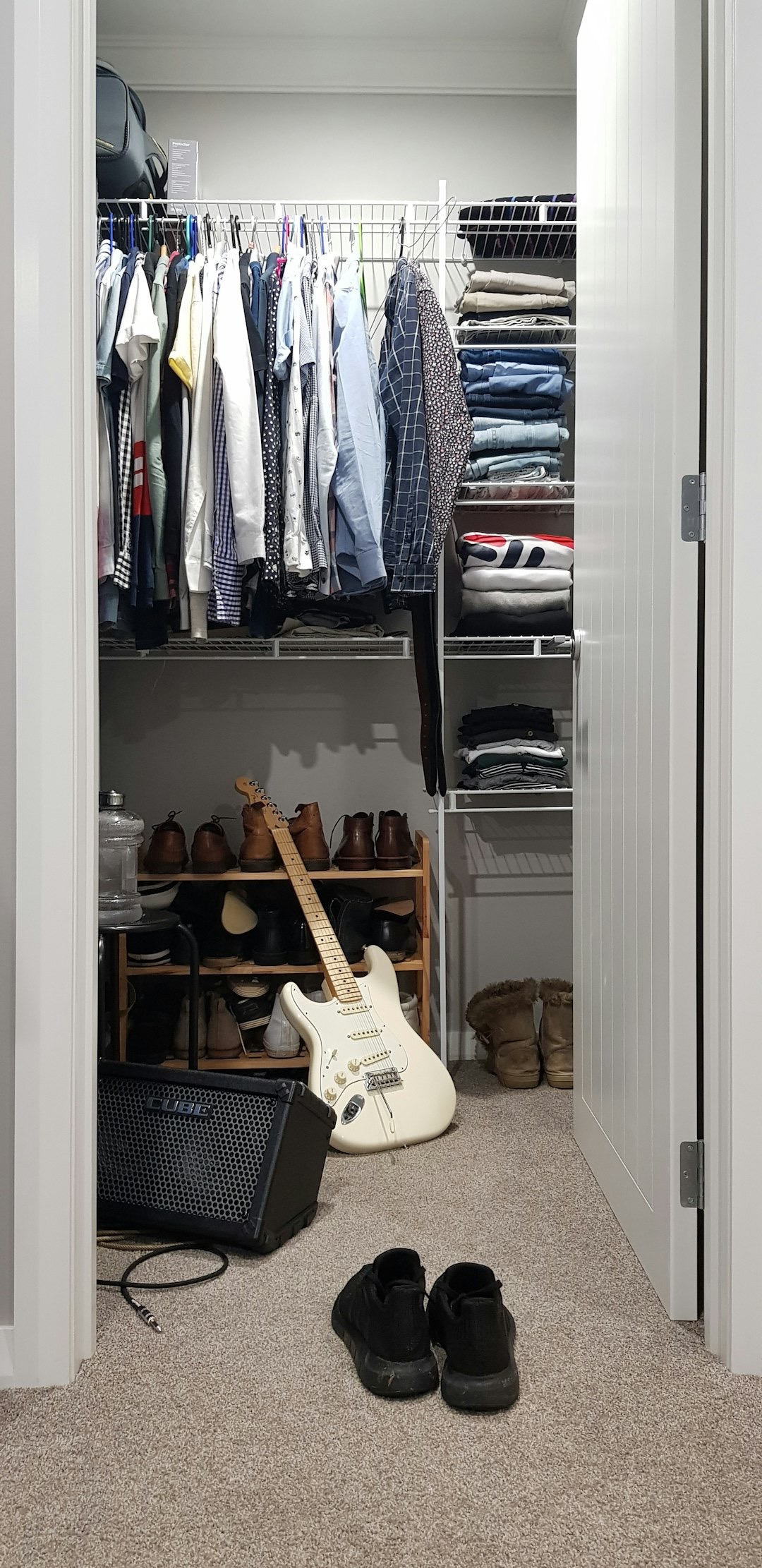
Pull everything out of your closet and put it on your bed. Every single item. This is important: you cannot properly edit a closet by looking at things hanging in it. Spread out on a flat surface, you see everything clearly and the volume becomes impossible to ignore.
Now go through each item and ask three questions:
- Does it fit me right now — not ten pounds from now, not ‘with the right bra,’ not ‘if I hem it?’ Right now, as I am today?
- Have I worn it in the last 12 months? (Exception: true occasion wear like a formal dress or interview suit.)
- When I put it on, do I feel good? Not fine. Good.
Anything that doesn’t pass all three questions goes. Not into a ‘maybe’ pile. Out. Donate, sell, or recycle — but physically remove it from the closet that day.
This is the step most people soften. They keep the jeans that almost fit. They hold onto the blazer they paid too much for and wore once. The capsule closet only works if you do the edit honestly.
Step 2: The capsule number (how much is actually enough?)
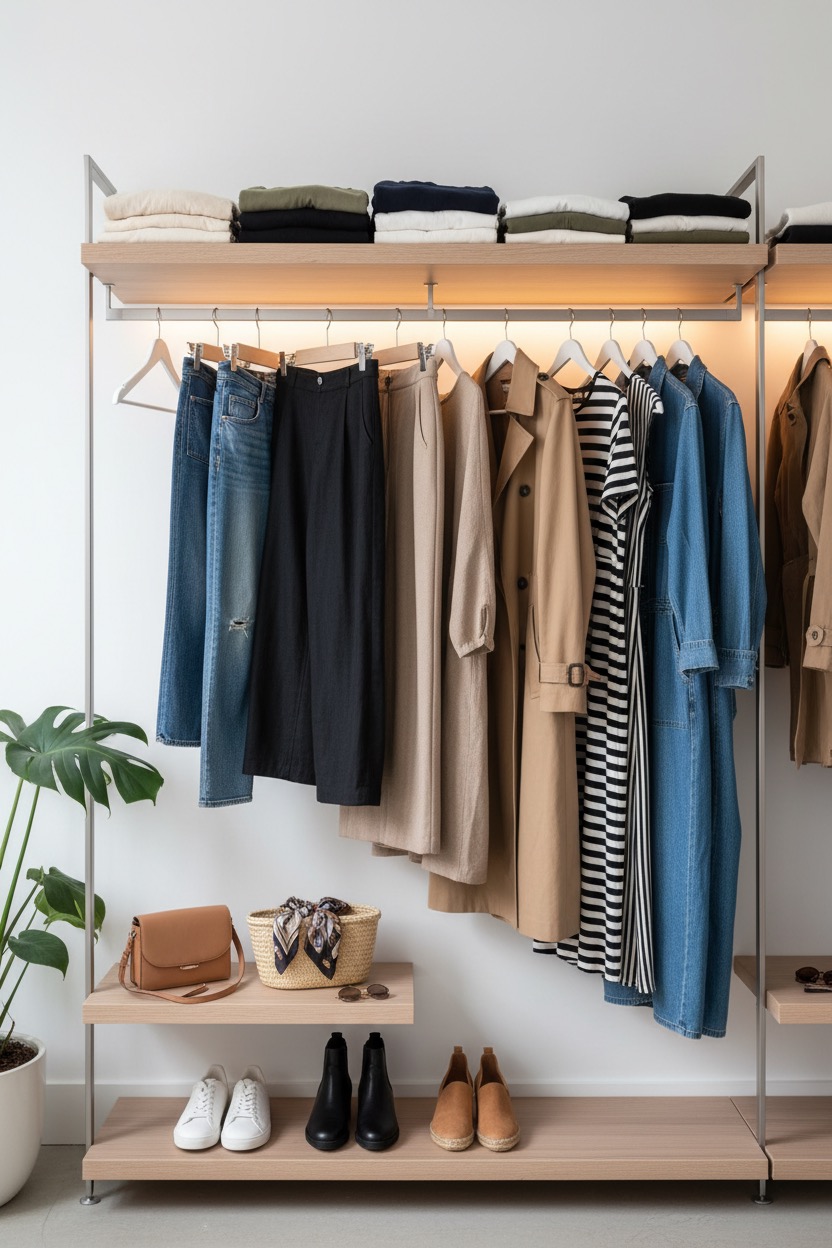
Fashion stylists recommend different numbers, but a functional capsule closet for most people contains roughly:
- Tops: 10–15 pieces (mix of casual, smart-casual, and one or two dressier options)
- Bottoms: 5–8 pieces (jeans, trousers, skirts — whatever your lifestyle calls for)
- Dresses/jumpsuits: 3–5 pieces
- Outerwear: 2–3 coats or jackets
- Shoes: 6–10 pairs (daily drivers, work, casual, one dressy option, one athletic)
- Accessories: A drawer’s worth, not a department store’s worth
Total: somewhere between 30 and 50 pieces of clothing, depending on your lifestyle and climate. That might sound like a lot less than what you currently own — or it might sound like more than you expected. Either way, it’s workable.
The key is that these pieces work together. If you can’t mentally picture wearing a top with at least three different bottoms you own, the top isn’t earning its place in a capsule wardrobe.
Step 3: Build the foundation colors first
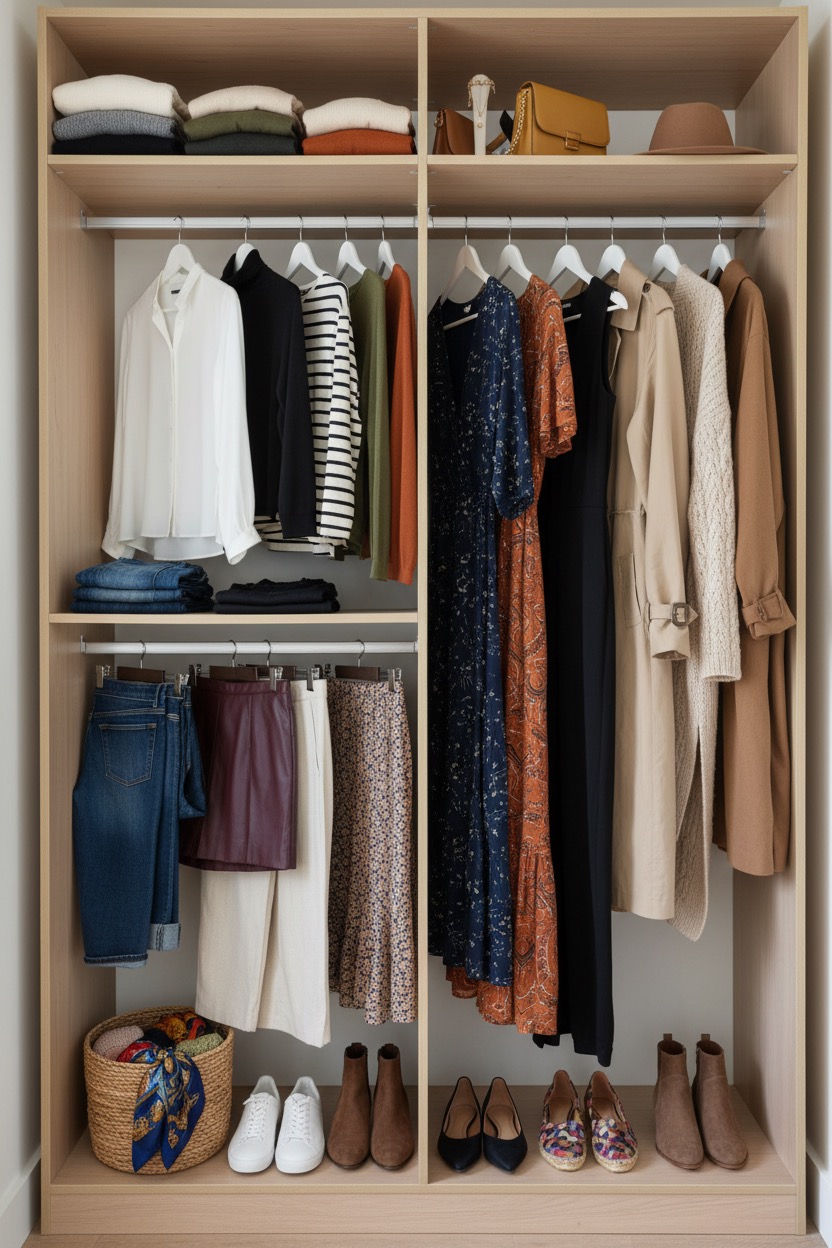
A capsule wardrobe works because the pieces are mix-and-match compatible. The easiest way to ensure this is to build around 2–3 foundation neutrals and 1–2 accent colors.
Foundation neutrals might be: black + white + camel. Or navy + grey + cream. Or chocolate brown + tan + ivory. Choose the neutrals that you’re naturally drawn to and that suit your skin tone.
Accent colors are the personality pieces — a rust orange, a deep forest green, a dusty rose. These accent pieces work with your neutrals and add variety without creating pieces that only match one other thing in your wardrobe.
This isn’t a rule you have to follow rigidly. It’s a framework that helps you shop more intentionally going forward — before you buy anything new, you ask: does this work with what I already own?
Step 4: Organize the closet itself
Hangers — the detail that makes the biggest visual difference
Replace every hanger with matching velvet hangers in one color. This is a $15–$20 investment that makes a dramatic visual difference — the closet immediately looks curated rather than collected. Velvet hangers also prevent clothes from slipping, which means less straightening and more breathing room no on the rod.
Arrange by category then color
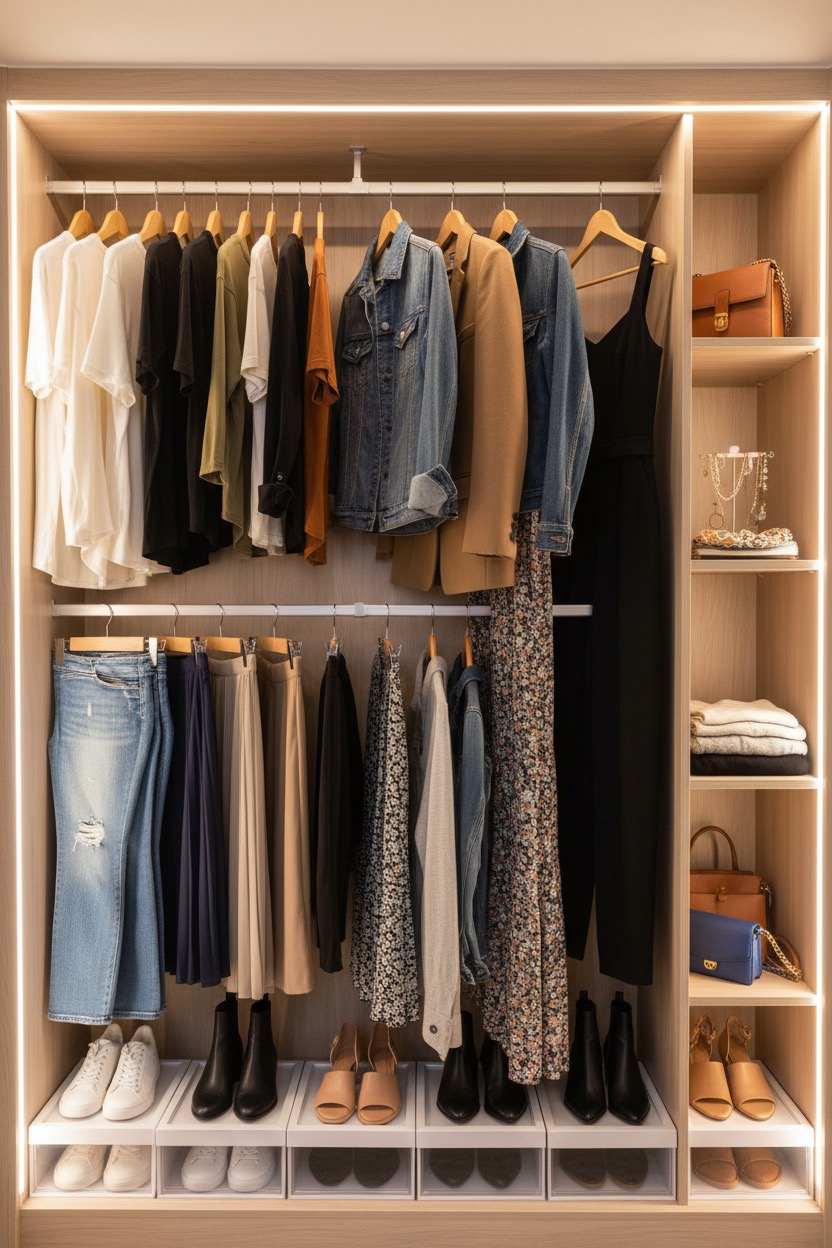
Hang clothes in categories (all tops together, all bottoms together, all dresses together) and within each category, arrange by color from light to dark. This makes every piece visible at a glance and makes outfit building faster — you can see all your tops and all your bottoms in one sweep.
Double your hanging space
If your closet has a single hanging rod, you’re using only half your vertical space. A closet doubler rod hangs from the existing rod and creates a second hanging level underneath — instantly doubling your capacity for shorter items like tops, jackets, and folded trousers.
Shoes
Clear stackable shoe boxes let you see every pair without opening anything. Stack them with the most-worn pairs at eye level and less-frequent ones up high or down low. Alternatively, a shoe shelf on the closet floor with pairs toe-out (so you see the silhouette) is a simple, no-purchase solution.
Seasonal storage
Out-of-season clothing doesn’t need to take up prime closet real estate. Vacuum storage bags compress bulky sweaters and coats to a fraction of their size and store flat under the bed or on a high shelf.
Step 5: The rule that keeps it a capsule
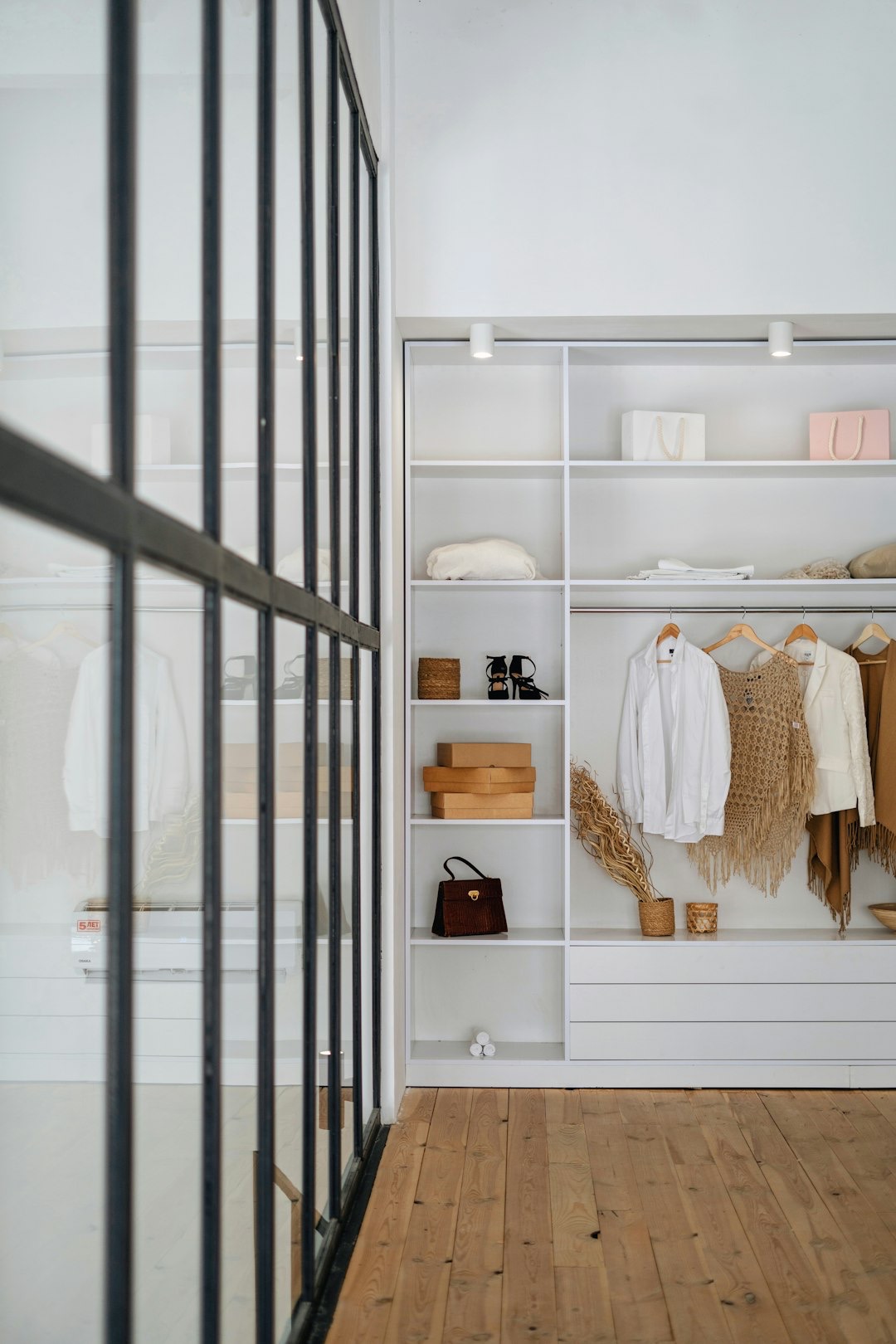
One in, one out. Every time something new comes into the closet, something leaves. Not “eventually” — the same day. This is the only rule that prevents the capsule closet from slowly becoming a regular closet again over the next twelve months.
It also changes how you shop. When you know that buying a new top means giving one up, you become more intentional about what you buy. You stop purchasing things impulsively because they’re on sale. You start buying things because they genuinely fill a gap in your wardrobe.
That shift — from reactive shopping to intentional shopping — is the quiet gift a capsule wardrobe gives you over time.
→ Next: Under-Bed Storage Ideas That Actually Look Good